Presently, a company’s digital presence is vital, and from my experience, social media is the leading player in the business sector seeking to expand its online presence. As an author of the content, I know pleasure is getting quality, engaging content that captures attention, bandages relationships and attracts leads.
Whether you are managing the social channels of a small local business or a big online retail giant, I am confident that improving your content strategy for social media can significantly improve your marketing strategy.
Following the experience I got, I have conceptualized seven imaginative ideas for content creation that can better social media strategies, amplify engagement rates, and ultimately bring about the expected conversions:
1. The Power of Visual Storytelling
Indeed, one of the tactics I discovered was visual storytelling, which has always been influential in creating social Media Content Techniques. People are naturally drawn to content on their screens and want information conveyed easily and securely.
These are some effective visual storytelling strategies that I follow:
Use the logo with the same color and type of Text to create an image of your brand that is immediately remembered.
Include UGC in your post to up your street cred and authenticity.
Use classical photos with motion graphics to catch the attention of those scrolling through the pages.
Here are some ways I get more UGC:
Valitse haarukka, joka on leveys. Here is the answer sheet to help you.
One way to describe the program is as win-win, as customers are asked to share their experiences in exchange for discounts or other perks.
To increase engagement, you can tell a story about customer content on both stories and feeds.
2. Embrace Live Streaming
Live streaming has been gently pushing social media content creation to success. Platforms like Instagram, Facebook, and YouTube make getting into live action easy because followers can track in real time. For most, live video is ingrained in one’s wishes and creates an appeal that prerecorded videos simply do not have.
These are some of the things I adopt when live-streaming:
Please give a short introduction and make it catchy to get the live viewers on board before discussing the live stream.
Direct interaction with the viewers by reading and answering the comments and questions they drop during the session is the best way of involving them in the process.
You can use the live stream as a blog and show it later as a post, blog, or short video.
3. Creating Interactive Content
In my work, I noticed that content facts like polls, questionnaires, or interactive infographics are a fresh way to reach the other side of the podium, i.e., human beings can also be reached willingly and conversationally through entertainment.
This method has been made possible by writers who use interactive conversational content that allows readers to understand and learn while interacting with the brand. Through their interactions, they are not just users but also facilitators of the brand’s success.
Here are some interactive content examples that I frequently use:
To solicit audience feedback on the new feature, opinion polls were introduced on Instagram and Twitter.
The platform conducts interactive infographics that allow users to do more research by clicking on any graph on the world map.
Develop question sets that will help users gain a more in-depth knowledge of the products or invoke a positive feeling in them.
4. Incorporate High-Quality Videos
In my experience, the video format continues to be the dominant one on social media and one of the best techniques among content marketing strategies. Video is a powerful form of communication, and the trend shows that shorter videos are the best way to relay the message.
Dillon’s weekly video is under 5 minutes, with 1-2 minutes of guest interviews and the rest of his stories and opinions sent in by other people. He also values his relationships with co-workers and friends outside the company.
These are some of the types of videos I manage in my content strategy:
The educational video answers customers’ questions. It can also demonstrate to customers how the thing they believe needs to be cut is being cut and, hence, is a wrong belief.
Doppler videos help business people examine their products more closely and learn about the machinery’s manufacturing process, conceptual instrumentalities, and functions.
A good product demo helps to set the stage for benefits and actions and previews the product before everyone else.
5. Utilizing Influencer Partnerships
Honestly, I have discovered that influencers can dramatically sway social media users’ decisions about products through their personalized showings.
These individuals’ influence over their followers and their trust within niche communities are why the companies they endorse gain popularity and command credibility.
Here’s how I choose the right influencers:
Seek influencers who mobilize people of the same age and socioeconomic groups as the target audience.
Find the influencers on the same page with you regarding tone, style, and content.
Track potential influencers’ level of engagement, not just their number of followers.
6. Repurposing Content for Multiple Platforms
In my content creation process, I often find that the real strength in making the most of content is re-designing the old stuff for different platforms.
A blog post, in the form of a LinkedIn article, may serve either as the original or the transformed one. This conveys each platform’s message while preserving the unique experience that the users enjoy.
Here are some great content repurposing ideas worth considering:
Webinar recordings may be reused as blog posts, new video clips, and short excerpts.
We divide one long article into several social media posts and distribute them across various platforms.
Use the thought of the blog itself to present short trick questions or visual graphics based on data that trigger positive mental responses in your users, e.g., funny statistics or line diagrams.
Conclusion
Having done several such projects, I can confidently say that the essential elements of an excellent social media strategy are creating exciting content, connecting with your product, and triggering emotions.
Businesses can use techniques such as visual storytelling, UGC, live streaming, and interactive content to this end. These techniques become prominent through the company’s social media presence, which becomes the main channel for dialogue with the clients.
After a careful study of digital marketing, I have concluded that a website is far more than just a collection of digital business cards; it is a potent instrument that can either make or break a brand’s success.
Many such businesses want to expand into cities, forming partnerships with London digital marketing agencies to access a wide range of services.
In my view, a well-made website is a company’s primary tool. It helps the brand communicate with the right audience properly and ranks as a top result out of the sea of websites on the internet.
It is only required to have enough visitors to a website. But things have changed, and now many online advertising agencies in London have realized that keeping their site SEO oriented is the initial and most crucial step to the success of their digital marketing strategy.
The Role of Web Design in Digital Marketing Success
For me, web design is one with digital marketing. The site should be the best tool for advertising all marketing strategies for unstoppable web success, optimized and visually attractive. Of the services, I am going through the process of Internet search marketing.
This is indeed the very one which, notably, the site, withstands against all (Microsoft Office tasks (word/Excel/PowerPoint, and publisher)- strong and practical development of the competitive Edge strategy).
Importance of User Experience (UX)
A purposely conceived, simple-to-use user interface allows individuals to efficiently surf the site, gather the necessary information, and execute the required actions—e.g., checking out, subscribing to a newsletter, or contacting the firm or individual concerned.
In my experience, a non-user-friendly UX raises the bounce rate. That is, users will leave the site without engaging, and thus, the user’s engagement with the content and the rating on the search engine site will be negatively affected.
Responsive Web Design: A Must-Have for London’s Digital Market
Responsive web design stopped being just an option and turned into a must. London is a vast city whose inhabitants are technophiles to the last, so the users expect that the online engagement of the sites on desktops, tablets, and mobiles is easy and consistent.
SEO as a Key Element in Web Design
My quest and observation have proven that if you want to stand out and do well in the London digital business scene, you must have web design and SEO working hand-in-hand on your site from the beginning. SEO, in turn, helps businesses get higher rankings on search engines or SERPs, which gives them access to more qualified clients.
On-Page SEO Fundamentals
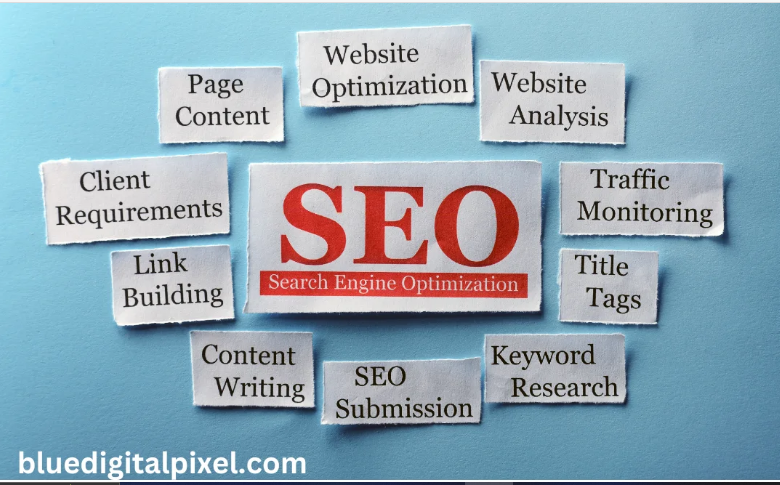
On-page SEO means placing the necessary settings in the correct positions to be highly intense regarding the search engines, which is why the individual pages get better positions. These include keyword usage, meta descriptions, title tags, and image alt Text.
One perfect approach is to carefully integrate Google Keyword Planner keywords such as “London,” “web design,” and “digital marketing strategies” at various points throughout the site according to the likely searches performed by the audience.
Importance of Fast Loading Times
In recent years, I have understood that page speed is critical to SEO rankings. Slow-speed websites, especially on mobile devices, will be placed lower in search results.
I have witnessed digital marketing agencies in London follow standard practices to increase the loading speed of their websites, such as reducing image files, caching browsers, and compressing CSS and Javascript to enable fast and smooth browsing.
Driving Engagement Through Quality Content
First, after a professional site has been developed and optimized, one should consider good-quality content. Content has a perpetual impact on the success of a digital marketing strategy, and it is a significant portion of both new customer acquisition and conversion into paying customers.
For companies based in London, let us explore the specifics of content that are acceptable and will most probably act as the bridge between the city and the locals. These would be expectations of Londoners, like adding the proper links to other local sites, using regular local keywords, and ensuring that all forms of written content are optimized for SEO.
Conclusion
In a hot and crowded place like London, a business that you may want to run has got a great deal more competing with countless other companies for the attention of consumers and is almost ready to take on building your online presence, which will be very important.
A digital marketing agency in London’s job is to make this technocentric world less complicated and full of style. Their unique skills in web design, local SEO, and content marketing aid them in conquering London’s fast-paced digital platform.
I am convinced that this tool will make companies prominent among the rest, who continually find that using the latest digital technologies is the most effective way to market themselves to potential customers.
The community engagement strategy that encourages our audience to interact and get to know us better, therefore making emotional connections, will be the most successful. Through the ensuing trust and gaining loyalty, we will attract more viewers who will also spread the word.
In this paper, I delve into methods, such as community engagement on social media platforms, online community management, and enhancing social media interactions, which are of general importance.
The Importance of Community Engagement in Social Media Strategy
Social media marketing combines two words to demonstrate the effective use of one medium through various social media sites. These interactions on social media have become the critical marker for growth; therefore, more than just having content is needed.
Engagement is the most common way to attract new members and keep those already there. Community engagement is the antithesis of going solo and contributes to member satisfaction and conversion into potential customers.
Frequently sharing activities, encouraging the members to write about them and contributing decisions on their part in our extended social world; thus, the effect of Proven Strategies for Social Media engagement remains high.
As for the organization, community engagement in London allows us to:
User commitment to the brand is one of the strongest. Such users usually entrust us and actively convey our services because they are the most significant contributors to our sharable content.
Securing customer trust: Transparency and clear communication create trust, the mainstay of durable relations.
Surge in the organic reach: Those connected often share the content and hence will have a wider organic reach.
Key Community Engagement Strategies for Social Media Success
Community management being proactive points out that the community manager must make the content relatable to its necessary target audience. Here are such strategies:
1. Do Interactive Q&A Sessions
One of the most straightforward yet effective methods to involve our audience in our community is by holding Q&A sessions. These live sessions could be held on Instagram, Facebook, or Twitter. By providing actual time answers to followers’ questions, we can carefully guide the enactment of trust bonding, and at the same time, our traffic is reinforced further.
2. Run Polls and Surveys
The full involvement of the public is ensured through polls and surveys, thanks to the audience’s participation in the decision-making process. For this reason, they can be used to measure customer preferences, new product ideas, or content preferences and to determine customers’ likes and dislikes.
3. Create Exclusive Community Groups
Limited group offerings can be utilized on these platforms to create groups. It is envisaged that organizations will be able to use the groups to comment on the content they enjoy and supply direct access to our brand.
4. Develop Partnerships with Influencers and Micro-Influencers
Imitating celebrities and models always adds up to the height of interest. Influencing through influencers is the most preferable way of getting community engagement. Influencers can expand our brand to thousands, if not millions, of new customers if we choose ones with a very loyal following.
5. User-Generated Content Campaigns
Encouragement of community members to contribute and engage in the content creation and sharing cycle is a very effective way of receiving massive social media engagement.
Customers can express their satisfaction with your product/service, provide reviews, or upload images of themselves using your product on their social media accounts.
Building a Strong Online Community Through Engagement
Generating such a community necessitates dealing with many issues step by step without leaving any gaps. Following are some of the critical factors to be taken into account for a robust implementation in the context of social media building:
1. Be Regular Communicators
Constant communication is the primary key to the retention and engagement of our audiences. This could be in the form of our replies to comments on posts and regular updates that keep the followers aware that our organization is active and is not only available but also interested in them.
2. Personalize Interactions
Realness and the sense of exceptional services to the community, as well asfake and repeated downgraded words, are not something you will experience here. Instead, the strategy they adhere to is personal. Realizing personalized interactions shows we listen to and appreciate the user’s opinions and contributions. Thus, we may assume that their feedback will be more attentive.
3. Status and Engagement with the Incentive Giving of Giveaways
Having a giveaway now and then, our community will love us more. This is a first-class way of rewarding our most active crowd. The advantages will ensure the satisfaction of loyal customers, support our followers, and even entice new people to join.
Effective Online Community Management for Long-Term Growth
Proper online community management includes:
Responding to comments.
Developing positive energies of dialogue.
Shepherding our audiences through their relationship with the brand.
Let’s look at the ways how we can achieve the desired result:
1. Lay Down Clear Community Principles
A strong community depends on codes that favour positive responses and less of the pesky ads that inundate our experience. We formulate guidelines wherein the community is supposed to be respectful and collaborative; off-topic advertising or using hostile language should also be prevented.
Conclusion
Consequently, mastering the community engagement traditions endorses building an engaging audience that will be a loyal fan club to our brands. This article discusses potential growth methods our marketing agency in London can employ using these techniques, one of which is improving customer loyalty.
In the dynamic and fast-changing world of social media success, more is needed to calculate known parameters such as followers or likes. To powerfully recognize how our firm got color on our wins, we have to look beyond just the total number of likes and the page shared.
In the process, one must understand the optimal KPIs and the aptest strategy to follow while dealing with the brand’s integrated social channels in-house or collaborating with a digital network marketing agency in London; as a case in point, there will also be variances of correct KPIs and influences.
The informational part of this story will reveal the most critical KPIs for social media strategies. Further, how to practically track and measure the achievement will be taught.
What are Social Media KPIs?
Through networking with a social media marketing agency in London, a mandatory stage in our plan is establishing a close relationship with the performance indicators near those the company is following.
This implies that the posts we publish should have a particular purpose tied directly to the firm’s success. Thus, it is done. KPIs let us measure the success of our social media activities, which are crucial for our successful operation.
The Importance of Tracking Social Media KPIs
Besides being worthwhile, tracking social media KPIs is done for several reasons. Firstly, it helps us recognize the strategies that work well and the ones we need to improve. We can base the data-driven decisions for our plan on the right indicators. KPIs are the easiest way to demonstrate the return on Money spent on this channel, and often, they are the only way to convince stakeholders of your work’s value.
We can obtain and analyze several metrics using Google Analytics, Sprout Social, or Hootsuite tools. It is, however, essential to know which ones are prioritized in doing so. One of the main concerns in tracking the success of our posts on social media is the most vital KPIs for that.
Essential Social Media KPIs to Track
1. Engagement Rate
The engagement rate indicator describes that your content is working as expected. It shows how the audience reacts to the post through “likes” by expressing their agreement, “comments” by sharing their thoughts, “shares” by recommending it to others, or “clicks” by visiting your post.
Engagement rate is the caramel scrutiny that helps us discern the recurring carriers of favour among those we target. It may also be a significant indicator of the existing rapport between the followers and our company.
Engagement monitoring also lets us shift the content strategy by attracting more interaction, e.g. creating interactive videos or posting quizzes, retarding audience gifts to knowing the results, etc.
2. Reach and Impressions
Reach and impressions are variations of KPIs that contribute to shedding light on the exposure of our content.
Reach represents the number of people the post is exposed to. It is the sum of the number of people reached by media without duplication, some or all of which may be the same person.
Impressions mean the total number of times our content is starred, not just by those who clicked on it and maybe factual.
Our social media “reach” could be how far and wide the post is going, while “impressions” would explain how the people got the ad and how many times they were exposed to it.
Launching our brand and making it top of mind are primarily media goals; thus, we work on reach, which is the priority. It is also necessary to make genuine efforts on our clever posts so they are equally shared on different social media platforms, such as Facebook, Instagram, and Twitter.
The main difference between reach and impressions is that reach shows the media’s impact on the potential audience, i.e. how many people the ad reached. In contrast, impressions reveal the number of times the ad was displayed, even if nobody clicked.
3. Click-Through Rate (CTR)
Supporting our posts with famous CTA (call-to-action) words such as “Click Here”, fantastic graphics, and proper information to foster this action are essential to growing our CTR. Through such analysis, we pinpoint which posts are the most impactful in traffic, and then we can use the copy as a blueprint for the rest of the posts.
4. Conversion Rate
Most of our social media campaigns aim to turn followers into clients finally. The conversion rate measures the percentage of users who have done something, such as signing up for a newsletter, submitting a form, or making a purchase as predicted in the campaign.
Conversion tracking is our manoeuvre to gauge the conversion of our campaigns into tangible business outcomes. We then structure our social media strategy to use top-of-the-line content and will encourage this content to have high conversions. After that, we enhanced the quality of the texts to persuade people to take immediate action when they visit the pages.
Formula to calculate conversion rate:
Conversion Rate = (Conversions / Clicks) × 100
5. Follower Growth Rate
The trend is a standard primary social media metric related to the follower count, while the growth percentage term gives a more insightful picture. Growth in the new follower base is the measurement point of the follower growth rate.
The fast development of followers could mean changes in the existing strategy, such as raising the quality of the content, timely posts, or establishing social ad campaigns. It is essential to recognize that people outside the institution and those within it expect us to continue connecting with them through the platform.
Our social media strategy is bearing fruit. This is evident through the number of new followers. Add to the fact that we are more visible, so many conversations are happening around us.
It is important to react quickly if there are spikes in the number of followers or a high follower growth rate, and these are not part of the social media strategy. In this sense, one can corroborate that the company is doing OK. The fact that people are defending our brand online against the competition is pretty essential.
6. Social Share of Voice (SSoV)
Social Share of Voice (SSoV) is a KPI that computes the brand’s exposure against your competitors. It is the necessary yardstick for measuring brand visibility and market positioning.
We employ SSoV when we do competitive analysis to learn about our perception in the industry, which in turn helps us devise the executive decisions of brand tweaking and expansion. By ranking highly on SSoV, we can raise brand awareness and compete against rivals.
7. Customer Satisfaction (CSAT) and Sentiment Analysis
Customer satisfaction and sentiment analysis address the audience’s feelings towards our brand. We accumulate and examine mentions, comments, and private messages on social media platforms to establish if we have contented customers and to offer the possibility for improvements.
For example, we may have encountered several complaints that indicate a problem that needs to be handled quickly. Also, feedback, such as comments stating things they like about the brand, maybe a motivator as issues are addressed and continue to be popular. Checking the sentiment around our brand conversations by employing tools that will help us pick up all versions of the feedback is helpful.
How We Measure Social Media KPIs Effectively
Now that we’ve discussed some essential KPIs or performance indicators, we must establish the necessary tools and methodologies to evaluate them. We use different platforms to measure KPIs, such as social media analytics, which additionally give us the ability to access, analyze, and act on the results of the studies conducted.
To track the progress of our KPIs, we implement a long-term strategy. We do this by gathering regular surveys and following the dynamics of our social media platforms.
Today, a successful business requires a good social media strategy in the ever-changing digital arena. A well-designed social media strategy can have a huge impact, creating trust, encouraging communication with your target audience, and increasing sales. Here, I’ll write my asides to provide revelatory information on using social media planning training.
The Importance of Social Media Strategy Development
Through social media, one can easily talk to his audience, familiarise them with his brand, and find ways to collect leads. However, winning popularity on social platforms is an exception to the rule. It demands a concerted effort to create a concrete social media strategy that goes with our business goals. A good game plan is crucial for social media marketing. Even the best social media tactics may only lead to measurable results if a plan is there to provide guidance.
Why We Need a Social Media Strategy
It is a philosophical social media strategy that proscribes and thereby promises that all our consummation is directed to a greater goal. This is the number one reason why the development of a plan is essential:
Consistency: A plan keeps our content and the messages we send out throughout all the media intact and ensures they are all unified in their content.
Efficiency: A constant roadmap of the duties to be done in the goals and a timeline is specific and clear goals that define the whole route from planning to how the team will operate during this time of collaboration.
Measurability: It helps us see our performance, obtain results, and improve based on that information.
Customer Engagement: Well-targeted Marketing gives us the best leverage by creating solid relationships with our audience, resulting in more engaging contacts.
Core Elements of Social Media Strategy Planning
The design of social media strategies hinges on the effective management and integration of several components that are central to long-term survival:
Setting SMART Goals: Our objectives should be Defined, detailed, Measurable, Achievable, Relevant, and Timely. They could include increasing brand awareness, driving traffic, and engaging social media.
Target Audience: It is paramount to identify the audience through their demographic information, preferences, and behaviour toward products and services. In this context, we’ll need to apply adequate research to find suitable content that will appeal to them.
Platform Selection: Social media Availability does not mean equality. Before gym enrollment, we should determine the social networks that best suit our target audience and business goals.
Content Strategy: We have designed a content plan with a post-mix of educational, promotional, and entertaining messages.
Analytics & Monitoring: We continue checking our toccheck using Google Analytics, social media insights, and third-party resources.
Social Media Marketing Tactics That Drive Results
We must embrace surefire social media marketing tactics for our strategy to be result-generating. The right approach allows us to deliver the most vital message and increases visibility in social channels.
Leverage Paid Social Advertising
Even though organic reach can be beneficial, social media algorithms increasingly favour paid promotion. Paid social advertising allows us to target audience groups precisely and elevate our visibility. The growth of this area has given us new tools such as Facebook, Instagram, and LinkedIn that provide excellent targeting facilities. We can target the clients we want using these platforms’ features based on their location, interests, technologies, and behaviours.
Create Engaging, Shareable Content
Traffic and shares are some of the outcomes of social media content that get a positive response from visitors. To be successful on social media, we need content that engages, shares and is interactive. Engaging content often includes:
Visual Elements: Infographics score the highest among text-only posts. Images and clips also top-rated the state of engagement.
User-Generated Content: We should urge our audience to generate and upload relevant posts to our brand.
Interactive Content: Polls, quizzes, and live sessions can all enhance your relationship with your audience.
Content consistency is essential. We must post regularly to keep our audience engaged and tailor our content to each platform’s strengths.
Engage With Our Audience
One of the essential characteristics of a social medium is that it creates a two-way conversation. A social medium is not a mere broadcasting channel but a direct line of communication with our audience. Comment feedback, participation in discussions, and other such activities are ways to use social schools and attract people. This practice also humanises the company, and in doing so, it gives the brand a stable and more trusting bond with the customers.
Steps to Create a Winning Social Media Strategy
Fashioning a triumphing social media strategy is a process that involves several well-thought-out steps. By following these steps, we can lay a solid foundation for our social media activities:
Conduct a Social Media Audit: The first step in a successful new social media strategy is to analyse our performance last time.
Set Clear Objectives: We need to define our goals in our social media strategy first before anything else.
Identify Our Target Audience: We must produce social content that grabs the audience’s attention.
Choose the Right Platforms: Our focus should be on customers’ most frequented platforms.
Create a Content Calendar: This tool will keep us on track and allow us to plan and distribute content accordingly.
By adopting these steps and realising the tactics stressed, we can make a solid and effective social media strategy that delivers positive results for our organisation. Remember, creating an excellent social media strategy is a continual process that means constantly revising and changing it according to performance data and market conditions.